
How to cut a cigar correctly
Smoking a cigar is more than just a habit; it is a ritual that requires careful preparation and precision. One of the most important steps in this ritual is cutting the cigar correctly. An incorrect cut can significantly affect the experience and make the cigar unsmokable. In this guide, you will learn how to cut a cigar correctly, which tools you need and which techniques you can use.
Why is the cut so important?
The cut of a cigar is crucial because it influences the flow of smoke and the flavour. A poor cut can cause the cigar to burn unevenly, the wrapper to be damaged or the draw resistance to be too strong. To ensure the best possible smoking experience, it is therefore important to cut the cigar carefully.
The cigar may be cut in this area
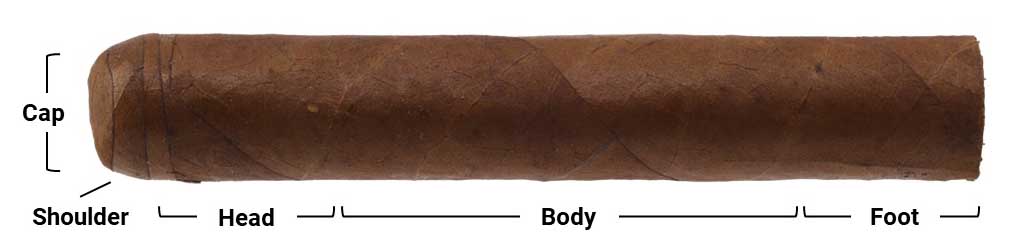
An important point when cutting the cigar is where it may be cut. To do this, the structure of the cigar must be examined more closely.
During production, the filler, consisting of tobacco leaves (blend), is held together by a binder. The wrapper is then rolled onto the cigar. No glue is normally used in this process.
The head of the cigar is then sealed with a piece of tobacco. To do this, a remnant of the wrapper leaf is taken and a drop-shaped piece is cut out, which is glued to the cigar in a twist with the help of a natural adhesive. This piece holds the wrapper leaf in place and prevents it from rolling off the cigar. It is visible on the shoulder of the cigar.
Finally, a round piece is cut from the remains of the wrapper leaf and glued to the cigar as a cap. This piece serves aesthetic purposes and makes the cigar a little more stable for cutting.
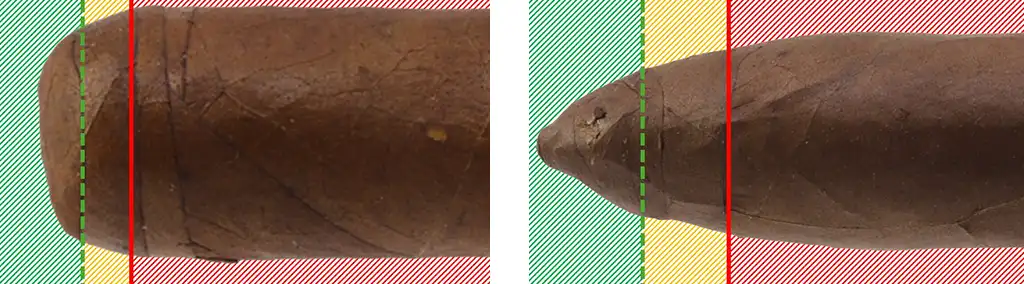
If the cigar is now cut after the shoulder, i.e. at the head, where the cigar is already straight, the wrapper can come loose and unwind. For this reason, it is important that the cut is made at about 3/4 of the diameter of the cigar. This is usually at the cap of the cigar.
The right tools
There are various tools that can be used to cut a cigar. The most common are
- Guillotine cutter: A simple and effective tool that enables a straight cut. They are available in single or double blade versions.
- V-Cutter: This cutter produces a deep notch cut in the shape of a "V". It is particularly useful for cigars with a larger ring gauge.
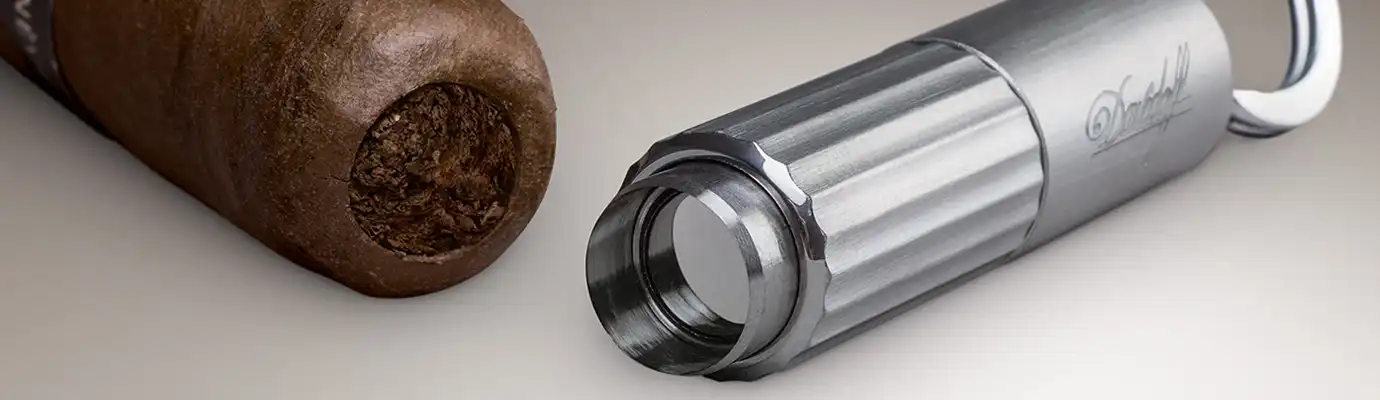
- Cigar drill (Punch Cutter): This tool punches a small hole in the end of the cigar. It is ideal for smaller ring gauges and provides a firm draw.
Cutting with the classic guillotine cutter
Cutting cigars with a guillotine cutter is one of the most common methods of preparing a cigar. Here is a guide:
Choosing a guillotine cutter: a guillotine cutter is a tool with one or two blades that provide a clean, straight cutting surface. There are simple models with one blade, but we do not recommend them. These models cut on one side and press the cigars on the other. This can damage the cigar.
Positioning the cigar: Hold the cigar firmly and position the cutting area in the guillotine cutter. The blade should be just above the cap of the cigar.
Correct cut: Cut the cigar as shown in the diagram above. A clean cut ensures a better draw and a more pleasant smoking experience.
Making the cut: Squeeze the guillotine cutter quickly and firmly to ensure a clean cut. A slow or hesitant cut can crush the tobacco and lead to an uneven cut.
Checkingthe cut: After cutting, the cut surface should be smooth and straight. If there are any loose tobacco leaves, remove them carefully. A well-cut cigar should allow a free and even flow of air.
Cutting a cigar with a guillotine cutter is a technique that requires some practice, but when used correctly, provides a clean cut surface and a better smoking experience.
Trimming with a V-cutter
Cutting cigars with a V-cutter is a popular method that offers a unique cut and a special smoking experience. Here is a guide:
Choosing a V-Cutter: a V-cutter has a V-shaped blade that makes a deep notch cut into the cigar. This type of cut can increase the volume of smoke and provide a different flavour perception than a straight cut.
Positioning the cigar: Hold the cigar firmly and place the blade of the V-cutter on the closed end of the cigar, the cap. The blade should be positioned in the centre to ensure a symmetrical cut.
Correct cutting point: Position the blade so that it penetrates the cap but does not go too deep into the cigar. A cut that is too deep can damage the tobacco and impair the structure of the cigar.
Making the cut: Squeeze the V-cutter quickly and firmly to achieve a clean, even V-cut. Slow or hesitant cutting can crush the tobacco and result in an unclean cut.
Checkingthe cut: After cutting, the V-shaped cut should be smooth and even. Carefully remove any loose tobacco residue to ensure a free and even airflow.
The V-cutter produces a deeper cut than other cutting methods and can intensify the smoking experience as it exposes more surface area of the tobacco. This method requires some practice to achieve the correct depth and symmetry of the cut, but when used correctly it offers a distinctive and enjoyable smoking experience.
Cutting with a cigar drill
Cutting cigars with a cigar drill, also known as a "punch cutter", is a simple and effective way to prepare a cigar for smoking. Here is a summary of the process:
Choice of cigar drill: a cigar drill has a cylindrical blade that makes a small, round cut into the cap of the cigar. There are different sizes of drills that can be chosen depending on the diameter of the cigar.
Positioning the cigar: Hold the cigar firmly and place the blade of the cigar drill in the centre of the cap of the cigar. Make sure to hold the cigar stable to ensure a clean cut.
Drilling: Turn the drill carefully but firmly into the cap of the cigar. Apply even pressure and turn the drill bit until the blade has reached the desired depth. Avoid applying too much pressure to prevent the cigar from cracking.
Removing the drill: Pull the drill slowly and carefully out of the cigar. The cut tobacco residue often remains in the drill and can be easily removed.
Checkingthe cut: After drilling, the cut surface should be clean and round. Carefully remove any loose tobacco residue to ensure a free and even flow of air.
The cigar borer creates a small, precise cut that keeps the cigar intact and allows a concentrated airflow. This method is particularly popular with thicker cigars as it does not damage the tobacco and prolongs the smoking experience. The drill is easy to use and requires little practice to achieve even and clean cuts.

Do you have any questions or suggestions?
Then you can contact us at any time, we look forward to hearing from you!
support@zigarrenversand.ch
+41 52 624 26 00